
Supreme Court Obliterates Trump’s Birthright Citizenship Order in Major Defeat
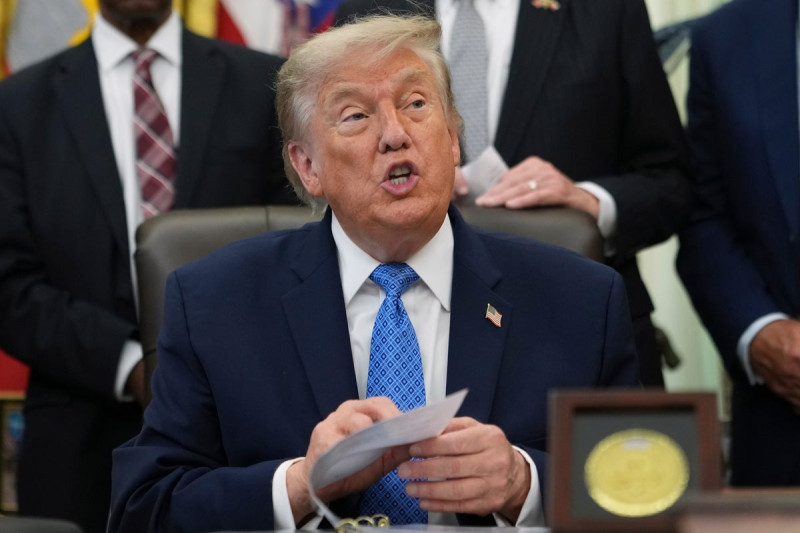
The Supreme Court obliterated President Trump’s executive order aimed at denying birthright citizenship to children of illegal immigrants and tourists, delivering a crushing defeat for his administration.
This order, initiated on day one of his presidency, faced intense legal scrutiny over its potential violation of the 14th Amendment, which asserts that “All persons born or naturalized in the United States, and subject to the jurisdiction thereof, are citizens of the United States and of the State wherein they reside.”
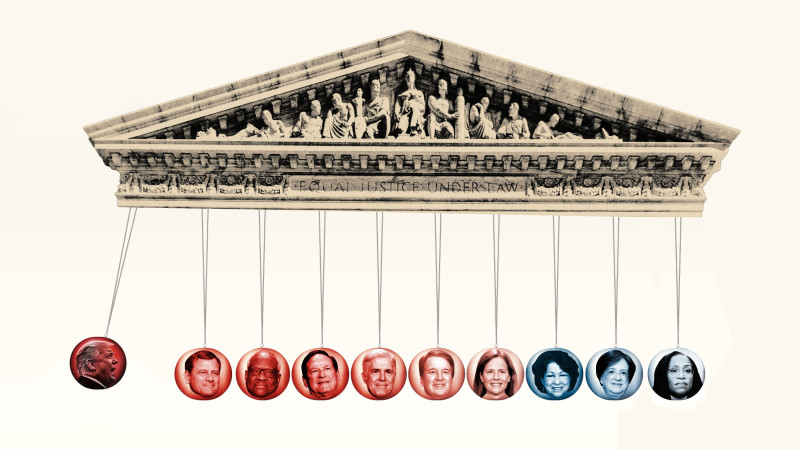
In a narrow 5-4 ruling, the court determined that even those “born in the United States to parents unlawfully or temporarily present” are protected under the equal protection amendment. This means any alteration to their citizenship status would require a constitutional amendment, a nightmare scenario for the White House.
Justice Brett Kavanaugh, while agreeing with the majority on some points, argued that the order violated federal law from the mid-20th century. He stated that only Congress could change the status of children born to foreign nationals.

Trump and his supporters quickly seized on Kavanaugh's comments, hoping to push through a legislative fix in Congress instead of pursuing a constitutional amendment.
Senator Eric Schmitt (R-Mo.) claimed on X that the Supreme Court majority attempted to “constitutionalize unlimited birthright citizenship,” but suggested Kavanaugh’s opinion might leave a legislative door open. He announced plans to file new legislation.
Trump sarcastically remarked that the ruling was a “gift to China,” referencing reports about pregnant Chinese women exploiting birth tourism. He has long claimed that birthright citizenship fuels illegal immigration and vowed to eliminate it as part of his broader immigration strategy.
On Truth Social, Trump expressed disappointment over the ruling but insisted that Congress could rectify the situation without a cumbersome constitutional amendment.
Chief Justice John Roberts, writing for the majority, dismissed this “dramatically revisionist view” of the 14th Amendment. He was joined by conservative Justice Amy Coney Barrett and liberal Justices Ketanji Brown Jackson, Elena Kagan, and Sonia Sotomayor—a rare coalition on a divided court.

Roberts emphasized that citizenship is fundamentally about having rights and participating in the political community. He reaffirmed that the Framers of the Fourteenth Amendment intended to extend citizenship to “every free-born person in this land.”
The court’s opinion did not explicitly block Congress from legislating on birthright citizenship, but its constitutional interpretation makes such efforts unlikely to succeed. Legal experts have warned that Congress cannot unilaterally end the policy without an amendment following this decision.
Dissenting justices Samuel Alito, Neil Gorsuch, and Clarence Thomas expressed strong opposition. Alito criticized the majority opinion, arguing that the 14th Amendment only grants citizenship to children who owe allegiance solely to the United States.
He declared this ruling one of the most significant mistakes in Supreme Court history, asserting that it perpetuates an outdated British legal principle abandoned by other nations.

Thomas echoed Alito’s sentiments, claiming that the court has distorted the Fourteenth Amendment to protect rights never intended by its authors. He expressed doubt that today’s ruling would endure over time.
Research indicates that over 250,000 babies born annually in the U.S. would have been impacted by Trump’s executive order.
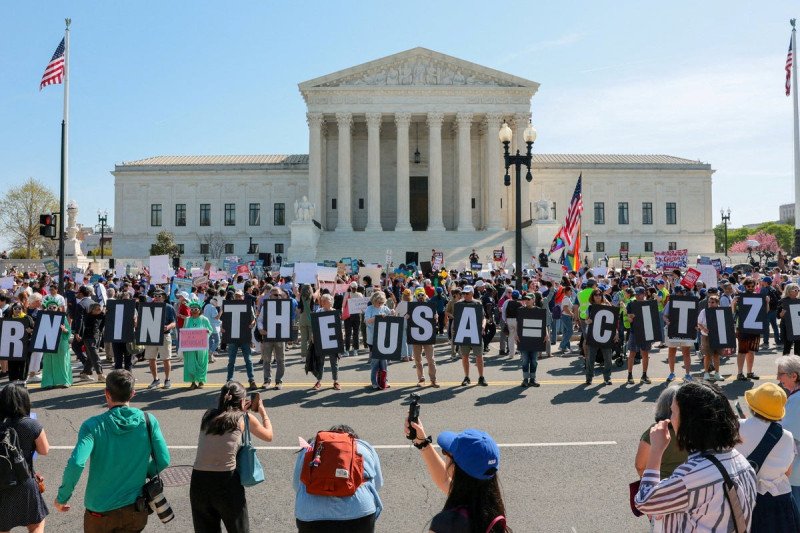
Trump made history as the first sitting president to attend Supreme Court oral arguments when this case was heard on April 1, highlighting its significance.
Experts had anticipated this outcome, expressing skepticism about Trump’s ability to redefine birthright citizenship through executive action.
In February, Trump faced another setback when the Supreme Court ruled against his use of the International Economic Emergency Powers Act (IEEPA) for imposing tariffs on foreign nations.

To amend the Constitution regarding birthright citizenship, a two-thirds vote in both houses of Congress and approval from 38 state legislatures would be required—a nearly impossible feat amid current political divisions.
A pivotal case in this context is US v. Wong Kim Ark from 1898, which established that nearly all native-born children in the U.S. automatically acquire citizenship unless they are born to hostile occupying forces or foreign diplomats.
During oral arguments, Solicitor General John Sauer noted that Wong Kim Ark involved children of legal immigrants rather than illegal aliens.
Roberts countered this distinction, stating that historical evidence does not support any domicile limitation imposed by the ratifiers of the Fourteenth Amendment.

The case at hand, Trump v. Barbara, arose from challenges by three individuals affected by the executive order. Barbara is a Honduran asylum seeker who gave birth last October; Susan is a Taiwanese student whose daughter was born in April 2025; Mark is a Brazilian permanent residency applicant whose son was born in March 2025.
All three plaintiffs alleged that Trump’s order unlawfully stripped their children of U.S. citizenship and associated benefits like Social Security and Medicaid.
A federal judge in New Hampshire issued a preliminary injunction and certified their children as part of a nationwide class action.
“Citizenship, then and now, was the right to have rights—to freely participate in our political community,” Roberts reiterated in his opinion. “We keep that promise today.”
More than 250,000 babies born in the US each year would have been affected by the executive order, according to research by the Migration Policy Institute and Pennsylvania State University’s Population Research Institute.