

Trump Declares Iran Will Never Go Nuclear as GOP Senators Slam Draft Agreement
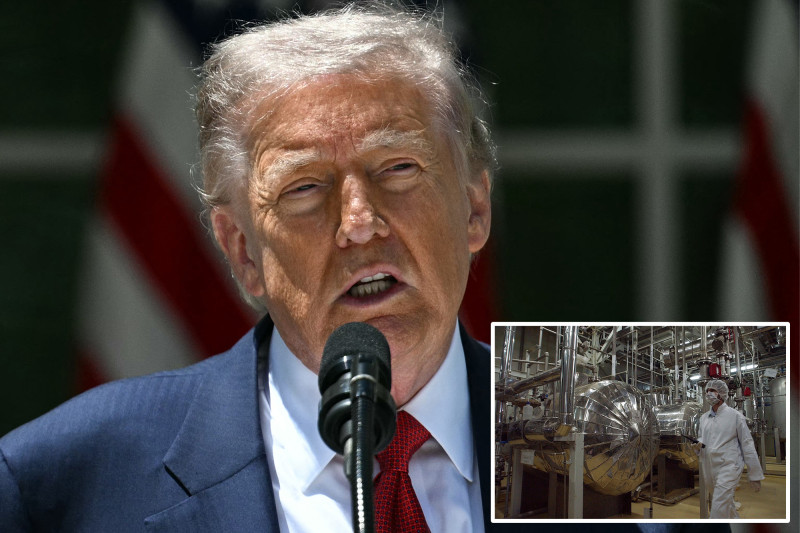
President Trump made a bold proclamation Sunday: Iran will never possess a nuclear weapon. This declaration comes on the heels of prominent GOP Senators expressing serious doubts about the details of a fragile peace agreement currently in the works.

On Saturday, Trump hinted that his team was “finalizing” negotiations, but by Sunday morning, he took to Truth Social to emphasize patience. “I have informed my representatives not to rush into a deal; time is on our side,” he stated, reinforcing that the blockade would remain intact until a solid agreement is reached and signed.
“Both sides must take their time and get it right. There can be no mistakes!” he added, echoing a sentiment that resonates with many in his party.
However, the skepticism from Republican foreign policy stalwarts is palpable. They criticized the rumored deal for failing to adequately address Iran's enriched uranium stockpile and for placing too much faith in the Islamic Republic. “The rumored 60-day ceasefire — with the belief that Iran will ever engage in good faith — would be a disaster. Everything accomplished by Operation Epic Fury would be for naught!” lamented Sen. Roger Wicker (R-Miss.), Chairman of the Senate Armed Services Committee.

Details of this tentative agreement remain under wraps, but reports suggest it involves a memorandum of understanding lasting 60 days. During this period, Iran would clear mines in the Strait of Hormuz, a critical oil passage, while the U.S. would ease its blockade and sanctions on Iranian oil.
This move aims to alleviate global oil supply strains, but critics warn it could provide Iran with much-needed resources at a time when it’s already under economic pressure — all without securing any concessions on enriched uranium first.

As part of the deal, Iran would supposedly commit to halting its nuclear weapon development and negotiate the transfer of its highly enriched uranium, much of which is believed to be hidden underground. Yet, some Iranian officials have disputed claims that they agreed to surrender this uranium.

Iranian President Masoud Pezeshkian has publicly denied any intentions of pursuing nuclear weapons. “We are ready to assure the world that we are not seeking nuclear weapons. We are not seeking instability in the region,” he told reporters.
Trump remains adamant that Iran must relinquish its enriched uranium stockpiles and has not ruled out military action to enforce this demand. His ally, Sen. Lindsey Graham (R-SC), warned of dire consequences if Iran secures a deal that could allow it to blackmail the world through control of the Strait of Hormuz.
“If a deal is struck to end the Iranian conflict because it is believed that the Strait of Hormuz cannot be protected from Iranian terrorism, then Iran will be perceived as a dominant force requiring a diplomatic solution,” Graham posted on X.
Sen. Ted Cruz (R-Texas) also criticized the reported details of the agreement, stating, “If the result is an Iranian regime—still run by Islamists who chant ‘death to America’—now receiving billions of dollars and being able to enrich uranium & develop nuclear weapons, then that outcome would be a disastrous mistake.”
Former Secretary of State Mike Pompeo joined the chorus against the deal, labeling it “not remotely America First.”
This prompted a fiery response from White House Communications Director Steve Cheung, who shot back, “Mike Pompeo has no idea what the f— he’s talking about. He should shut his stupid mouth and leave the real work to the professionals.”
Sen. Thom Tillis (R-NC) expressed confusion over the shifting narrative regarding Iran’s nuclear capabilities, questioning why they would now consider accepting nuclear material remaining in Iran after previously claiming to have obliterated its defenses.
Trump reiterated his disdain for past agreements, particularly criticizing the Obama-era Iran Nuclear Deal as “one of the worst deals ever made by our Country.” He asserted that current negotiations are aimed at achieving the exact opposite outcome: preventing Iran from developing nuclear weapons.

Secretary of State Marco Rubio defended the ongoing negotiations, suggesting that “good news” is on the horizon regarding the Strait of Hormuz and asserting that critics underestimate Trump’s resolve on this issue. “There is no one who has been stronger on this issue than President Trump,” Rubio stated during a visit to India.
“The idea that somehow this president is going to agree to a deal that ultimately puts Iran in a stronger position regarding nuclear ambitions is absurd.”