

Trump Issues Ultimatum to Iran, Threatens Destruction of Key Infrastructure
WASHINGTON — President Donald Trump ramped up his rhetoric on Monday, issuing stark warnings to Iran regarding potential war crimes if the nation fails to meet his demands. Despite this aggressive stance, he also suggested that a ceasefire agreement with Iran's new leadership could be imminent.
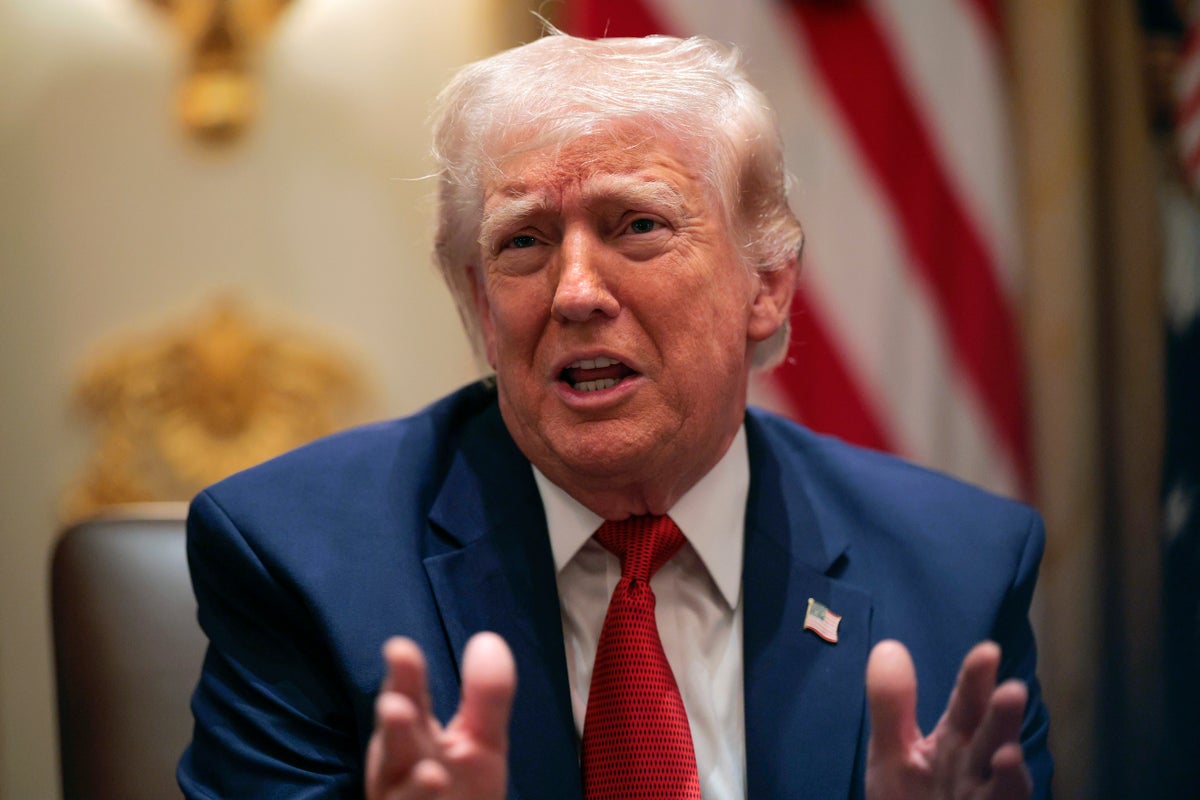
“If for any reason a deal is not shortly reached, which it probably will be, and if the Hormuz Strait is not immediately ‘Open for Business,’ we will conclude our lovely ‘stay’ in Iran by blowing up and completely obliterating all of their Electric Generating Plants, Oil Wells and Kharg Island (and possibly all desalinization plants!),” Trump declared on social media. He framed these threats as retribution for the loss of American lives during what he termed Iran’s “47 year ‘Reign of Terror.’”
Experts quickly pointed out that targeting a nation’s essential infrastructure, such as electricity and water supply systems, contravenes international law unless justified by specific military objectives. Trump's additional threat to seize Iranian oil further complicates the legal landscape.
Fiona Hill, a former National Security Council official, remarked, “Trump is in Putin territory,” likening his threats to the tactics employed by Russian President Vladimir Putin against civilian targets in Ukraine. “It’s a mafia boss play,” she added, highlighting the gravity of the situation.
Trump's initial threats to Iran's electrical infrastructure date back to March 21, when he demanded the reopening of the Strait of Hormuz within 48 hours. After extending the deadline multiple times, it remains unclear how his latest “immediately” directive impacts the ongoing negotiations.
Oona Hathaway, an international law professor at Yale, emphasized that Trump's threats constitute war crimes, particularly singling out the potential attack on desalinization plants as a violation of protections for civilian survival. “Such objects are specially protected,” she stated.
White House press secretary Karoline Leavitt did not address inquiries regarding Trump's threats during a briefing, asserting only that U.S. military actions would remain lawful while sidestepping follow-up questions about specific comments made by the president.
Brian Finucane, a former State Department lawyer, noted that legality hinges on whether actions are taken for military purposes. However, Trump’s framing of his threats as “retribution” suggests otherwise. “The president of the United States should not be threatening war crimes,” he asserted, warning that such actions could provoke retaliation from Iran against U.S. allies in the Gulf.
Finucane elaborated on the potential consequences: “There is very much a tit-for-tat dynamic going on here,” he said. “Why should the United States care about that? Because it has global ramifications, including the U.S. economy.”
Trump's recent threats come after years of advocating for aggressive military strategies. Two decades ago, he infamously suggested that the U.S. should seize Iraq’s oil following the invasion led by then-President George W. Bush. Such actions are classified as “pillaging” under international law.
During his 2016 presidential campaign, Trump proposed targeting the families of terrorists, dismissing concerns about war crimes by insisting that U.S. soldiers would follow his orders without question. “If I say do it, they’re going to do it. That’s what leadership is all about,” he claimed.
In his first term, Trump controversially granted clemency to retired Navy SEAL Eddie Gallagher after Gallagher was court-martialed for posing with an ISIS fighter's body. This decision was influenced by Fox News personalities and went against military advice.
Since last summer, Trump has also ordered extrajudicial actions against suspected drug smugglers in international waters, raising serious legal and ethical questions about military conduct.
Hill pointed out that incidents like the U.S. Navy sinking an Iranian frigate after it left a cultural exchange in India could also be classified as war crimes. “Is that not a war crime?” she questioned.
As Trump continues to make contradictory statements regarding the conflict, he appears to be attempting to stabilize both global oil markets and domestic stock markets. His military engagement, initially projected to last only weeks, has now extended into its fifth week while he claims progress is ahead of schedule.
Trump expressed confusion over whom to negotiate with in Iran due to the elimination of several Iranian leaders but simultaneously asserted that peace talks are progressing well. Upon returning to Washington after a weekend in Florida, he told reporters that he is effectively eliminating those he is negotiating with: “We’re doing extremely well in that negotiation, but you never know with Iran because we negotiate with them and then we always have to blow them up,” he remarked.
On Monday, Secretary of State Marco Rubio outlined objectives for military action against Iran, focusing on dismantling its air force and naval capabilities while notably omitting any mention of its nuclear program or ensuring free navigation through the Strait of Hormuz.
Hill noted that Trump's inconsistent statements often clash with those from his advisors and reality itself. “He’s negotiating in real time, as he has always done,” she said, drawing parallels between his approach to Iran and his treatment of Ukraine. “He’s treating the Iranians like the Ukrainians. Unlike the Ukrainians, the Iranians have a hell of a chokehold on the rest of the world.”