




Trump's 1 A.M. Pep Talk: A Masterclass in How NOT to Address a Nation in Crisis
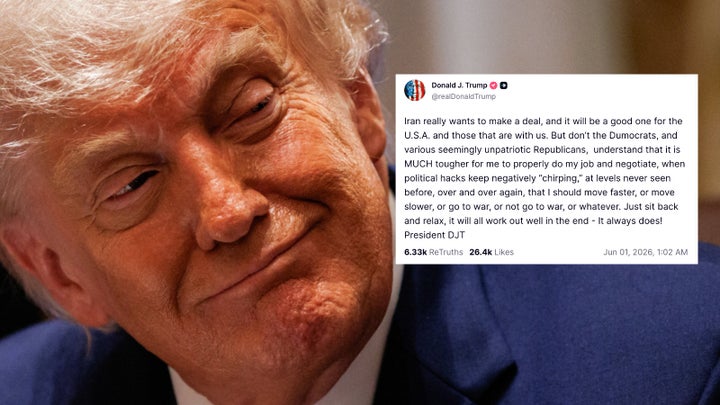
In the dead of night, the president took to Truth Social, delivering a tone-deaf message that could only be described as a masterclass in how to alienate a distressed populace. He brushed off dissent as mere “chirping” and told Americans to “just sit back and relax” amid escalating tensions surrounding the Iran war.
“Iran really wants to make a deal, and it will be a good one for the U.S.A. and those that are with us,” he declared in his 1 a.m. post. He went on to complain about political adversaries, stating, “But don’t the Dumocrats, and various seemingly unpatriotic Republicans, understand that it is MUCH tougher for me to properly do my job and negotiate, when political hacks keep negatively ‘chirping,’ at levels never seen before, over and over again, that I should move faster, or move slower, or go to war, or not go to war, or whatever.”
“Just sit back and relax,” he insisted. “It will all work out well in the end - It always does! President DJT.”
Does this sound reassuring? Anyone who has been told to “calm down” during a moment of panic knows it rarely works. Kristen Gingrich, a licensed clinical social worker in Maine, pointed out that phrases like “just relax” often backfire. They can imply that the person’s emotional response is the problem rather than acknowledging the distressing situation itself.
Ryan Martin, known as the Anger Professor, echoed this sentiment on the “Am I Doing It Wrong?” podcast, stating, “No, ‘relax’ has never relaxed anyone.”
Even well-meaning attempts to soothe can misfire when emotions run high. Martin explained that when people are agitated, they become defensive. Direct commands like “just breathe” fail to resonate.
Gingrich elaborated that telling someone how to feel can contradict what they truly need from the interaction. When someone is anxious or overwhelmed, they seek understanding and acknowledgment rather than dismissal.
Trump’s approach may have missed the mark entirely. Instead of feeling supported, individuals may feel pressured to justify their feelings. Gingrich noted that phrases like “calm down” can escalate emotions rather than soothe them. The underlying message can be interpreted as “you’re overreacting,” which is not what anyone intends.
Imagine people expressing distress over decisions you made that have serious consequences for them. Would you really tell them to “sit back and relax” and stop chirping?
The stress intensifies when the person advising calm is also the source of that stress. Gingrich pointed out that such comments can feel dismissive of the real issues at hand. The distressed individual may perceive it as an invalidation of their feelings.
In conversations with someone deeply troubled by significant consequences, there are far more effective responses. Acknowledging their feelings with statements like “I can see why you’re upset” or “this sounds really overwhelming” can foster connection.
Instead of saying “Don’t worry, it’ll all work out,” it’s more supportive to express understanding: “I can understand why this feels stressful,” or “tell me more about what’s worrying you.”
Forcing a resolution without addressing emotions can be counterproductive. Gingrich emphasized that most people want to help but often misinterpret the need for immediate solutions as a way to calm someone down.
People don’t necessarily need someone to fix their problems right away; they often just want validation of their feelings. Simple affirmations like “that makes sense” or “I’d probably feel stressed too” can go a long way in recognizing their concerns.
Here’s the kicker: You don’t even have to agree with their perspective. Validation doesn’t mean endorsing every thought; it means acknowledging that their feelings are valid given their experiences.
Gingrich clarified that many believe validation will exacerbate emotions, but in reality, people often calm down when they feel genuinely understood and heard.
This advice might seem basic for navigating personal relationships, but it’s a lesson the president could certainly benefit from as well.