



Trump's Inner Circle Aide Undergoes $20K MAGA Transformation, New Book Reveals
Natalie Harp, a prominent figure in President Donald Trump's inner circle, has reportedly undergone a significant transformation, with costs reaching as high as $20,000 for her makeover. This makeover aligns with the MAGA aesthetic that has become synonymous with women in Trump's administration.
The term "Mar-a-Lago face" has emerged to describe the striking changes in appearance among women close to the 80-year-old president. This aesthetic often includes aggressive plastic surgery, artificial tanning, and heavy makeup. While Harp has seemingly avoided the extreme "Mar-a-Lago face," she has still enhanced her makeup regimen to fit the MAGA mold.

Harp's journey as a vocal Trump supporter began in 2019 when she praised the president at Liberty University for the Right to Try Act. This legislation allows terminally ill patients to pursue experimental treatments after conventional options fail. Harp, diagnosed with stage 2 bone cancer, claimed this act provided her with a fighting chance against her illness.
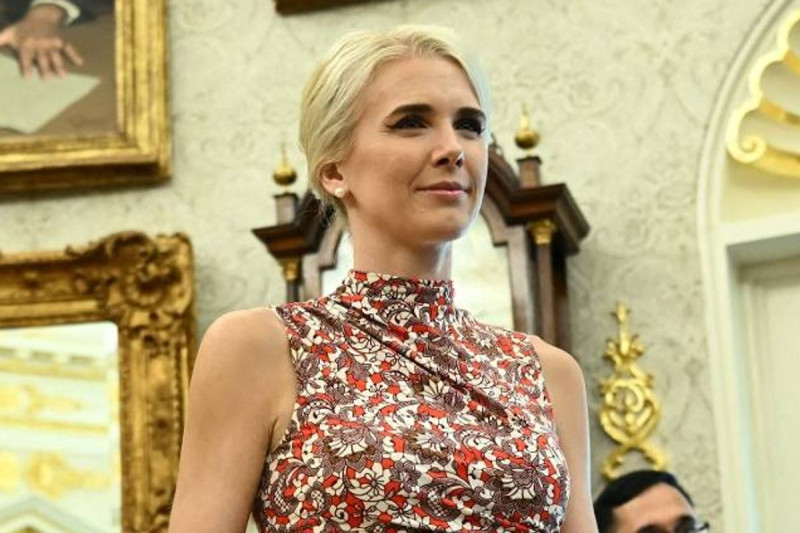
In her 2019 speech, Harp's makeup was understated. Fast forward to 2026, and her appearance has changed dramatically. Dr. Gizem Seymenoglu, a medical aesthetician, analyzed Harp's evolving look and noted that it may result from both styling changes and subtle cosmetic enhancements.

Dr. Seymenoglu pointed out that Harp's hair color appears darker, and her eyebrows are more defined, contributing to a more authoritative look reminiscent of White House style.
Recent photos suggest that Harp's cheeks have gained volume compared to earlier images. Dr. Seymenoglu speculated that this could be due to collagen-stimulating treatments like Sculptra or other biostimulators that enhance facial fullness gradually.

She also mentioned that dermal fillers might explain the changes in Harp's appearance, particularly if used minimally to restore cheek volume. However, Dr. Seymenoglu cautioned that natural factors like weight fluctuations can also affect facial appearance.
Despite the popularity of anti-wrinkle injections, Dr. Seymenoglu noted that Harp's recent images do not indicate their use, as dynamic lines around her eyes remain visible. The most noticeable change seems to be in her eyebrows, which appear more lifted and angular than before.

Dr. Seymenoglu estimated that if Harp underwent the treatments discussed, the total cost at premium U.S. cosmetic clinics could range from $10,000 to $20,000. This estimate varies based on practitioner expertise, location, and the quantity of products used.
Costs could escalate further if multiple treatment sessions are necessary, especially for collagen biostimulators like Sculptra, which typically require several appointments for optimal results.
Dr. Seymenoglu's assessment is based solely on publicly available images and does not involve a direct examination of Harp. Any referenced treatments are speculative and intended for educational purposes only.