

Trump's Reliance on Congress for Iran: A Complex Political Landscape
In a classified briefing yesterday, members of the House Armed Services Committee confronted Trump administration officials about the ongoing conflict in Iran, revealing a palpable frustration over the lack of clarity regarding the president's strategy and justification for military action.
Congress has gradually relinquished its war-making powers to the presidency over decades, yet it retains significant influence. Lawmakers from both parties expressed their concerns, particularly regarding the potential deployment of ground troops. Representative Nancy Mace, currently in a competitive GOP primary for governor in South Carolina, stated on X that she opposes sending U.S. forces into combat, especially after the briefing.
What role does Congress play if the president can initiate military action independently? Primarily, it revolves around legislation and public sentiment. The Pentagon is seeking a staggering $200 billion emergency spending bill for the conflict, surpassing any previous funding requests for the wars in Afghanistan and Iraq. Trump must secure congressional approval for this financial support.
However, garnering bipartisan backing is challenging, especially as public opinion shifts against the war. A recent Fox News poll indicated that 58% of registered voters disapprove of military action in Iran, while an AP-NORC survey revealed that 59% believe U.S. involvement has exceeded reasonable limits.
For Trump, who retains the authority to escalate or de-escalate military operations at will, having allies in Congress is crucial to persuading a skeptical public. While most Republican lawmakers profess support for Trump, there is a distinct difference between vocal endorsement and actively advocating for the war effort.
The frustrations voiced by Armed Services Committee members underscore their struggle to justify a conflict to constituents who remain unconvinced of its necessity or purpose. Historical parallels can be drawn to the fall of 1990 when public sentiment was similarly resistant to military intervention in Iraq. At that time, President George H.W. Bush launched a public relations campaign to shift opinion, ultimately leading to congressional authorization for war.
Today’s congressional members are apprehensive about endorsing a war they did not authorize, particularly as they face an electoral landscape where Republicans risk losing control of Congress. This context amplifies their frustrations.
As the conflict continues, Trump cannot retroactively establish a foundation for support; however, Congress will exert its influence through public discourse and budgetary decisions moving forward. The current dissatisfaction among Republican lawmakers does not bode well for the president's agenda.
In financial markets, U.S. stocks and bonds experienced declines as optimism regarding potential peace talks with Iran waned. The price of U.S. crude oil surged nearly 4%, nearing $95 per barrel, while international Brent crude rose over 5%, exceeding $109 per barrel. Since the onset of hostilities, crude oil prices have skyrocketed more than 40% and have increased over 60% since January.
The S&P 500 fell by 1.7%, with the Dow dropping 470 points and the Russell 2000 also down by 1.7%. The Nasdaq Composite suffered the most significant loss, plummeting nearly 2.4%, entering correction territory as it now sits 10.9% below its October peak.
Heating oil prices surged by 8% this afternoon, while the national average for unleaded gasoline reached $3.98 per gallon.
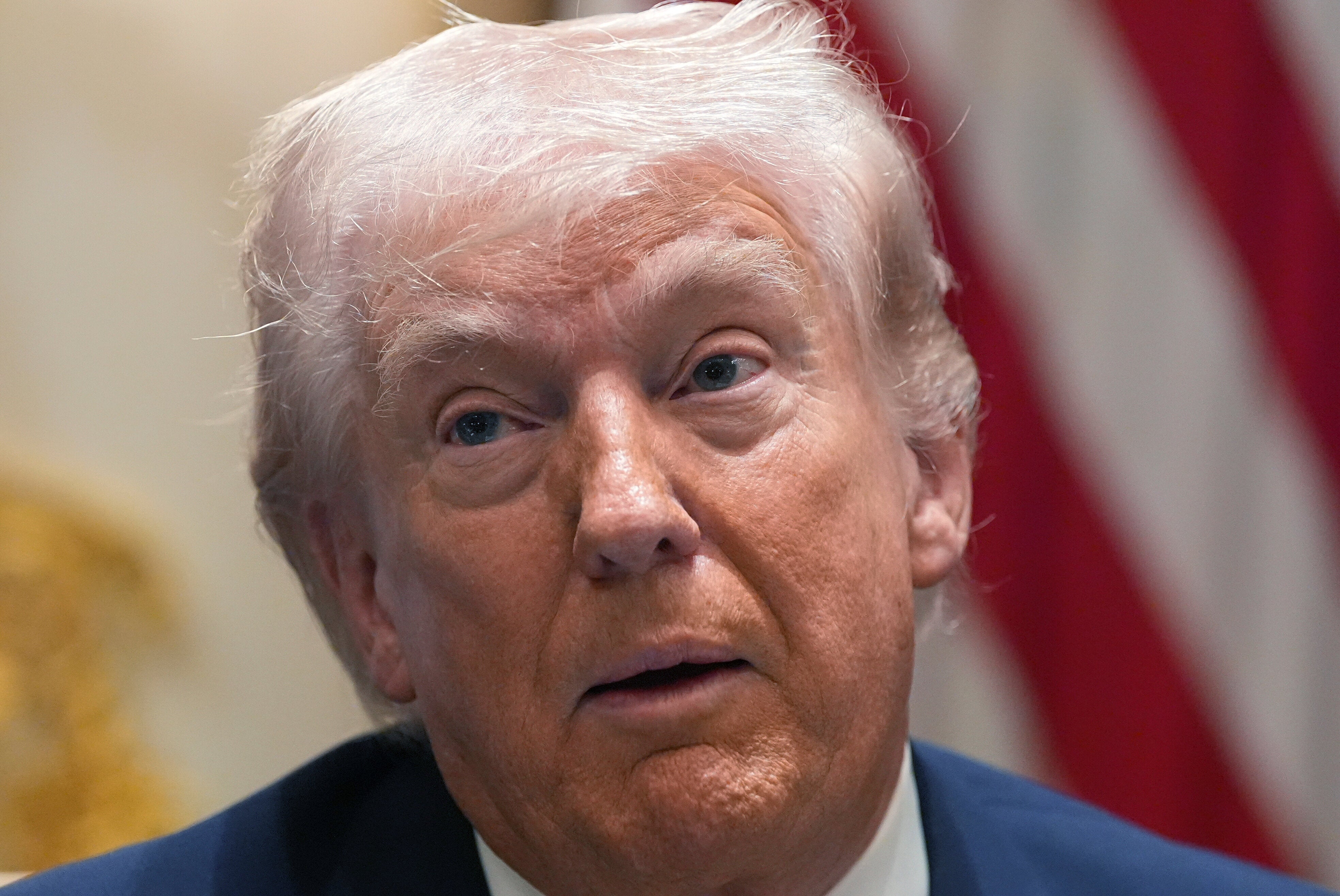
Despite these economic pressures, Trump downplayed the situation during a Cabinet meeting, asserting that energy prices “have not gone up as much as I thought.” He acknowledged that military operations are ongoing but expressed confidence that prices would eventually stabilize or decrease.
Trump also cast doubt on the likelihood of reaching a deal with Iran, stating, “They are begging to work out a deal... I don’t know if we’ll be able to do that.” Later, he announced via Truth Social that attacks on Iran’s energy infrastructure would be paused until April 6 as discussions continue.
This concludes today’s insights from the Politics Desk. Feedback is welcome at [email protected]. If you enjoy our coverage, please share it widely and encourage others to subscribe.