

Voting Officials Fear DHS is a Menace to Election Integrity
Markwayne Mullin, Secretary of Homeland Security, has become a focal point of controversy, with his history of election fraud claims raising alarms among voting officials nationwide.
Gary Berntsen, a former CIA operative, has long pushed the debunked narrative that Venezuela stole the 2020 U.S. election. Despite multiple refutations, including a $787 million settlement involving Fox News and Dominion Voting Systems, Berntsen remains undeterred.
In an interview, Berntsen claimed there are "14 different technical ways that you can steal an election." His pleas for attention have fallen on deaf ears, even in Congress, where he faced rejection from both parties.
However, one politician stood out: Markwayne Mullin. Berntsen asserts that Mullin facilitated a meeting at Mar-a-Lago for him to present his conspiracy theories about Venezuelan interference directly to Trump’s team.
Mullin's commitment to election denial is evident. On January 2, 2021, he publicly stated he could not certify the Electoral College results due to alleged fraud. Just days later, he was among 147 congressional Republicans who voted against certifying the election results after the Capitol riot.
This track record has intensified fears among election officials that the DHS will not act as a safeguard for elections but rather as a force undermining results unfavorable to Trump.
Local election officials from various political backgrounds have expressed reluctance to share voter data with the federal government, fearing misuse of that information. Matt Crane, a former Republican county clerk in Colorado, stated he actively discourages collaboration with DHS due to distrust in how the administration handles data confidentiality.
Trump's rhetoric about wanting to "take over" elections adds to these concerns. Crane pointed out that Heather Honey, the current DHS official overseeing elections, has a history of spreading misinformation about election integrity.
"These are not trusted partners anymore," Crane declared. "They've brought the fox into the henhouse."
The landscape of federal election security has drastically shifted since the last federal campaign. The Trump administration has aggressively pursued investigations into local election processes, including legal actions to obtain private voter registration data and attempts to access voting machines and ballots.
Trump allies have even suggested deploying immigration enforcement at polling places, which would violate federal law. Tom Homan, a White House border czar, hinted at such plans during an appearance on The Charlie Kirk Show.
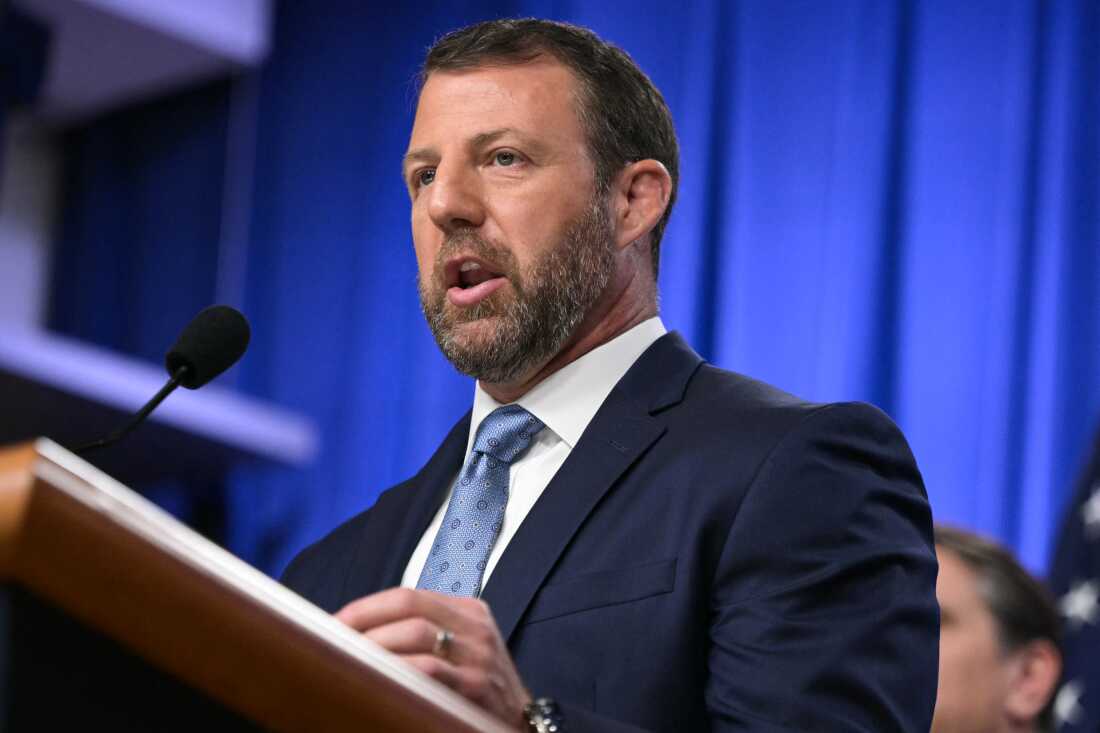
At his confirmation hearing in March, Mullin stated that DHS agents would only be present at polling locations if there was a specific threat. Yet, his leadership comes at a time when many personnel involved in election security at the Cybersecurity and Infrastructure Security Agency (CISA) have either resigned or been removed.
Paul Lux, a Republican election supervisor in Florida, reported that local officials have not received any cybersecurity services from CISA recently, despite assurances from the federal government that support continues as before.
"Try calling somebody at CISA and see who answers the phone," Lux challenged. "It's been radio silence from CISA when we reach out about just about anything."
A CISA spokesperson claimed the agency provides voluntary services to state and local election officials upon request but did not specify how many jurisdictions received assistance during Trump's second term.
The Elections Infrastructure Information Sharing and Analysis Center (EI-ISAC), which Lux previously chaired, was established after Russia's interference in the 2016 election highlighted communication gaps among election jurisdictions. However, funding for EI-ISAC was cut by the Trump administration in 2025.
Election officials are perplexed by how these funding cuts align with Trump's claims of wanting to secure U.S. elections. Jocelyn Benson, Michigan's Democratic secretary of state, criticized the dismantling of protections as detrimental to state efforts against foreign interference.
The EI-ISAC has struggled to create a sustainable membership model after losing federal funding, with current membership at less than 20% of its previous levels.
Senator Mark Warner introduced legislation aimed at restoring funding for threat-sharing services across local governments, but its future remains uncertain.
Marci Andino, executive director of EI-ISAC, emphasized the challenge of communicating with thousands of election jurisdictions without federal support. Many eligible jurisdictions are unaware they can join the group for free due to state-funded membership plans.
The EI-ISAC plans to establish a virtual situation room for elections this year, allowing officials to report threats in real-time. However, no representatives from DHS will be present during this initiative.
If the federal government seeks to regain a role in election security, Lux remarked that they would be welcomed back with skepticism. "They'll probably be that uncle that we keep at arm's length at Thanksgiving rather than giving him a big bear hug," Lux said. "The relationship has been damaged."