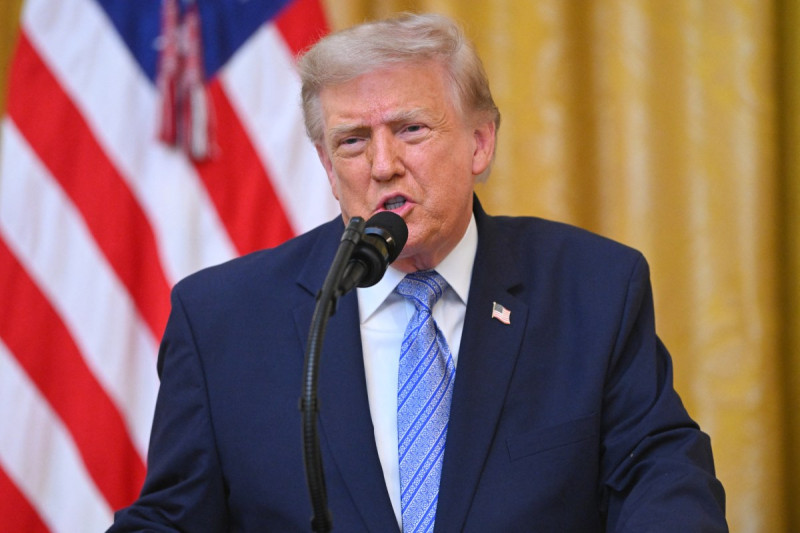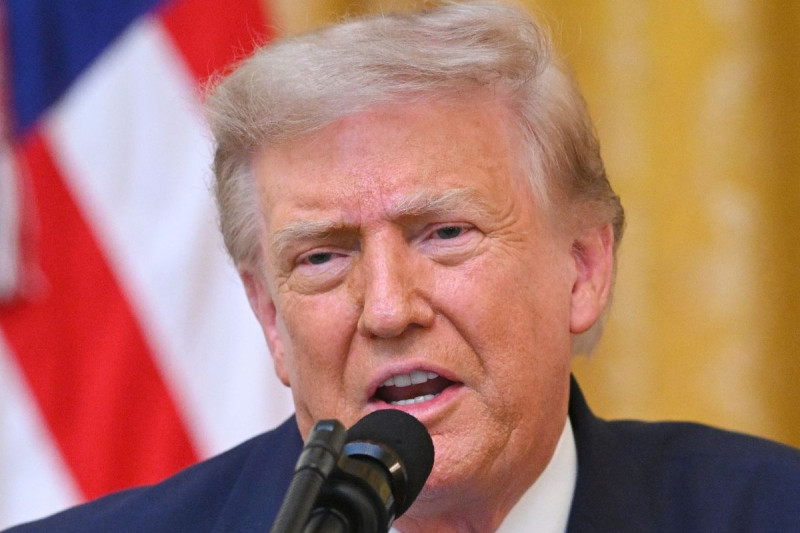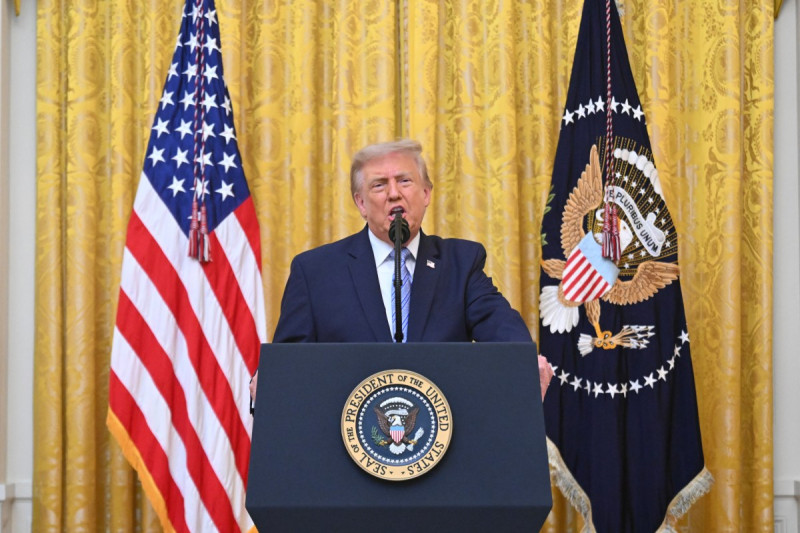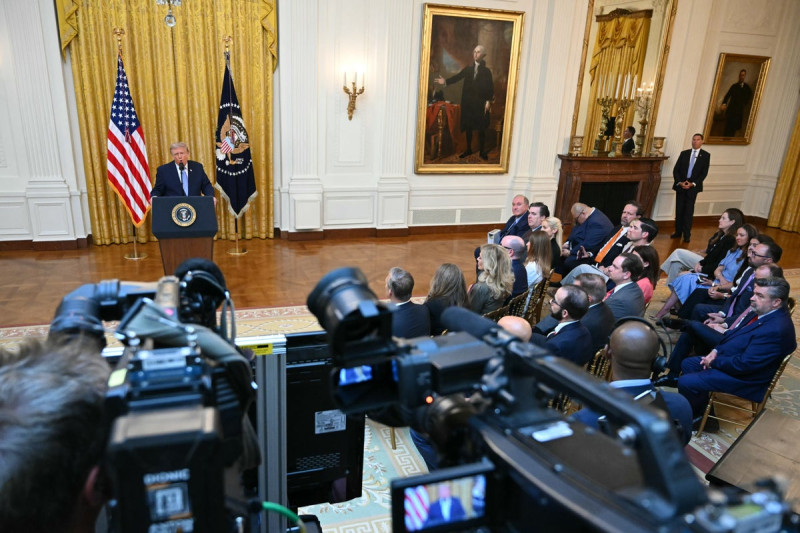


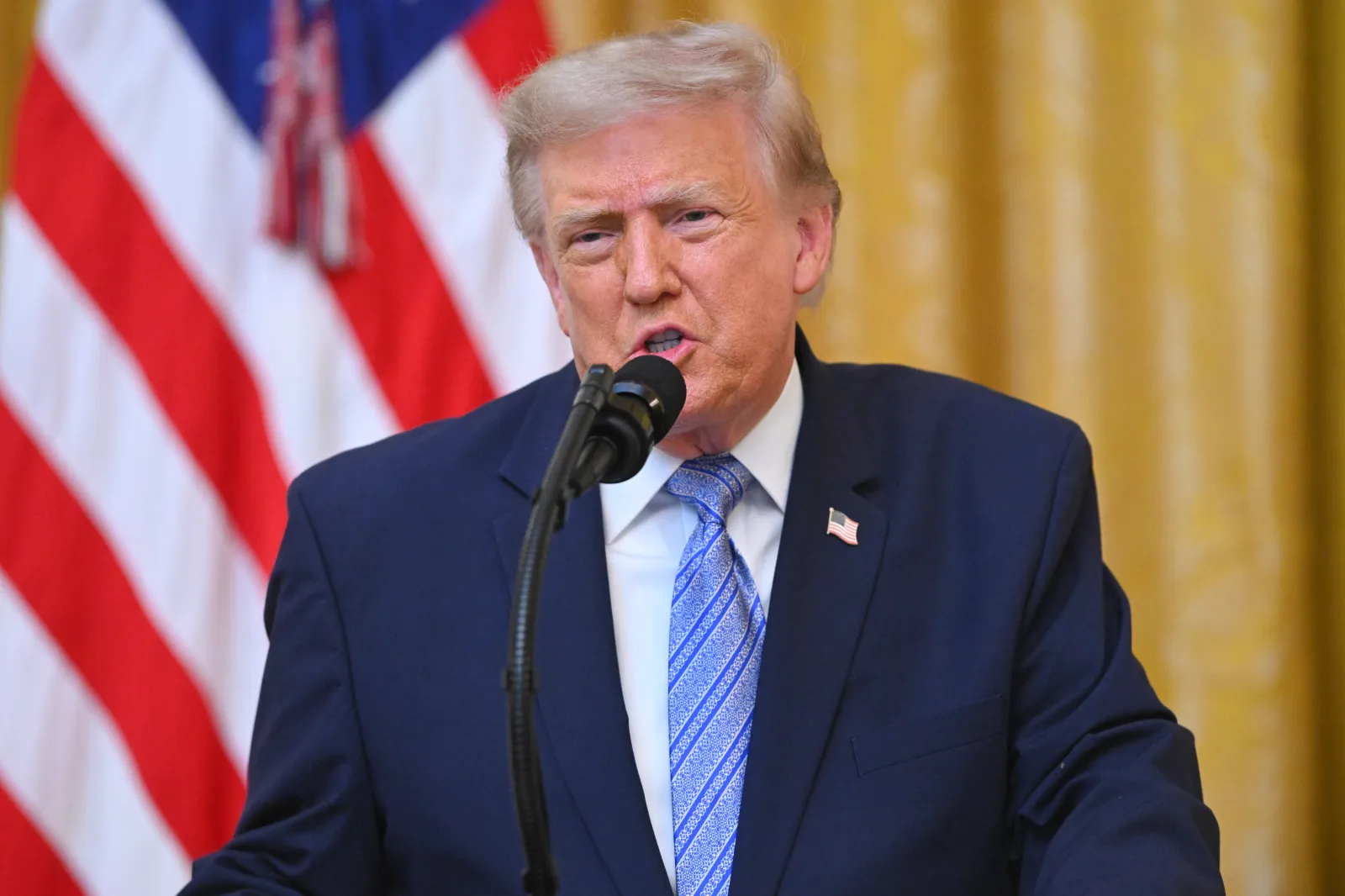
President Donald Trump’s recent primetime address, filled with baseless allegations of election interference involving China, has ignited fierce pushback from within his own party.
For years, Trump has propagated claims of widespread voter fraud in the 2020 election, which he lost to Democrat Joe Biden. Despite audits confirming the election's integrity, Trump continues to assert that the election was stolen. In his latest address, he announced plans to release documents that supposedly outline concerns regarding election integrity.
Trump claimed that China executed "what is believed to be the largest compromise of election data in history," alleging that it acquired 220 million U.S. voter files containing sensitive information. The White House also reported that approximately 278,000 noncitizens were identified on state voter rolls during a Department of Homeland Security review.
He insisted that China aimed for his defeat in the 2020 election and referenced FBI intelligence suggesting Beijing attempted to manufacture illegal ballots for Biden. Trump further alleged that a “deep state” conspiracy sought to hide the extent of this interference.
This speech coincides with efforts from the White House and Trump-aligned Republicans to advance the SAVE Act, which has passed through the House but is stalled in the Senate, requiring Democratic support to overcome a 60-vote filibuster. The proposed legislation mandates Americans to provide documentary proof of citizenship when registering to vote in federal elections, targeting undocumented immigrant participation.
Many conservative supporters seized upon Trump’s speech to renew calls for the SAVE Act's passage. However, several Republicans outright rejected Trump’s claims. Numerous lawmakers and Democratic leaders dismissed his assertions as unsubstantiated conspiracy theories.
Representative Don Bacon, a Nebraska Republican not seeking reelection, countered Trump’s claims during a CNN interview, stating that the 2020 election was “not stolen.” He attributed Trump’s loss to Republicans discouraging their voters from voting by mail.
Bacon described Trump’s focus on election fraud claims as “costly,” warning that it could alienate swing voters. He emphasized that pragmatic Republicans see the situation differently and suggested that Trump could pursue more sensible strategies for the upcoming elections.
He pointed out the importance of filling vacancies on the Election Assistance Commission and supporting CISA to help states secure their elections.
Utah Lieutenant Governor Deidre M. Henderson criticized the lack of communication from federal agencies regarding threats to the 2026 elections. She called for the restoration of election security resources cut in recent years and urged federal officials to cease threatening states and filing frivolous lawsuits that waste taxpayer resources.
Ben Ginsberg, a former Republican election lawyer, condemned Trump’s claims during a CNN interview, asserting that there remains no evidence of any election irregularities. He acknowledged inconsistencies in the U.S. election system but argued that increased federal funding is necessary to address vulnerabilities.
Ginsberg remarked, “This feels a little bit like an own goal,” pointing out that cuts to cybersecurity agencies like CISA could leave states vulnerable if issues arise in future elections.
Representative Thomas Massie from Kentucky labeled Trump’s assertions about China obtaining voter files as “absurd,” noting that voter data is readily accessible in Kentucky for a fee.
Stephen Richer, a Republican former Recorder of Maricopa County, Arizona, also refuted claims of voter fraud, arguing that even if tabulation machines were vulnerable, any manipulation would be detected through post-election hand counts.
Georgia Secretary of State Brad Raffensperger stated that Georgia conducts thorough citizenship checks and has implemented robust verification processes.
Democrats reacted strongly to Trump’s speech, with Senator Ed Markey of Massachusetts calling for his impeachment for undermining free elections. Markey urged civic action against any federal agents sent to polling places.
Senator Mark Warner from Virginia warned that free elections are “under attack” and emphasized the need to fight back against Trump’s assertions to protect democratic values.
Despite dissent within the party, many Republicans supported Trump’s speech. South Carolina Representative Nancy Mace claimed that over 250,000 non-citizens are illegally registered to vote in just four states, reinforcing the need for the SAVE Act.
Secretary of Homeland Security Markwayne Mullin announced plans to scrutinize all election records for illegal voters, including deceased individuals who may have voted.
Mullin asserted that foreign adversaries could manipulate voting machines and change voter registrations, stating unequivocally that it is possible.
Following Trump’s address, critics raised concerns about cuts to CISA. Former U.S. Ambassador to Russia Michael McFaul questioned why Trump would reduce funding for cybersecurity if he is genuinely concerned about election integrity.
CISA was established during Trump’s first term to protect critical infrastructure, including election systems. However, it faced backlash from Trump and Republicans over its efforts to counter misinformation regarding the 2020 election. Following the election, Trump dismissed CISA's director after he disputed Trump's fraud claims.
Since Trump's return to office last year, CISA has lost about a third of its workforce. Reports indicate that its staff numbered 3,400 in January 2025.
In March last year, Trump's administration cut $10 million from two cybersecurity initiatives aimed at assisting state and local election officials shortly after placing several CISA employees on leave amid an investigation into its election-related work.