
Trump's Voter Purge: Millions of Registrations Under Fire as Critics Cry Foul
TOPEKA, Kan. — The Trump administration is on a mission, and it’s not just about winning elections. Millions of voter registrations are being scrutinized through government databases, raising eyebrows and fears of a massive purge of eligible voters just in time for the November elections.
In a sweeping move, over 67 million registrations—mostly from Republican-led states—have been subjected to an intensified verification program at the U.S. Department of Homeland Security. The result? Tens of thousands flagged as potential noncitizens or deceased individuals. Some states are giving voters as little as a month to prove their eligibility, while others are suspending registrations immediately.
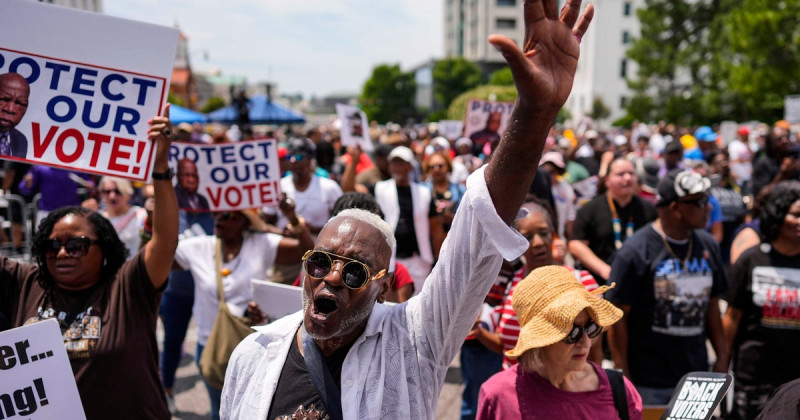
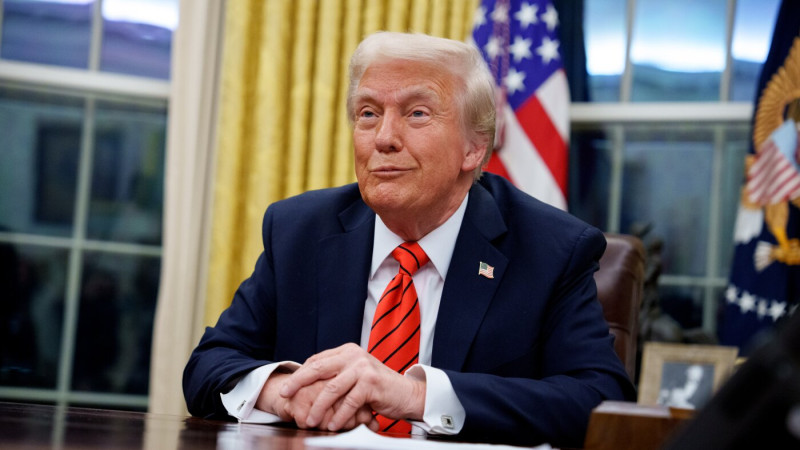
This national-level scanning of state voter rolls is part of a broader strategy by President Trump to federalize election processes and push his narrative that noncitizen voting is rampant, despite evidence showing such cases are exceedingly rare. Voting rights advocates are sounding the alarm, claiming the DHS system is riddled with errors that could wrongly disenfranchise eligible voters.
“If a voter is wrongly removed, by the time they learn about it and correct it, they may miss their opportunity to vote in that election,” warns Freda Levenson, an attorney with the American Civil Liberties Union of Ohio. The ACLU is currently challenging an Ohio law that mandates monthly checks against the DHS system.
Take Anthony Nel, for instance. This 29-year-old citizen from South Africa found himself ensnared in this bureaucratic web. Flagged as a potential noncitizen when Texas ran its voter file through the DHS verification system, his registration was temporarily canceled while he awaited a new passport. “I’m like, ‘You should know that I’m a citizen, that the passport exists,’” he expressed in frustration.
Trump’s overhaul of U.S. elections includes calls for a federal list of verified voters, with his Department of Justice pressuring states to hand over unredacted voter information for mass checks through the DHS program known as SAVE—Systematic Alien Verification for Entitlements. The Justice Department has even sued states that refuse to comply, claiming it’s all about ensuring adherence to federal law and maintaining accurate voter lists.
Since April 2025, at least 25 states have utilized SAVE to vet their voter rolls after the Trump administration expanded its capabilities. A staggering 60 million registrations were checked within a year, not counting an additional 7.4 million from North Carolina, where Republicans dominate the state election board.
Citizenship and Immigration Services (CIS) insists it’s “committed to helping eliminate voter fraud” to restore trust in elections. Kansas Secretary of State Scott Schwab, a Republican, recently touted SAVE as a crucial tool for verifying voter information, despite previously expressing skepticism about noncitizen voting being a significant issue.
According to CIS, the 60 million checks identified around 24,000 potential noncitizens and approximately 350,000 individuals who appear to be deceased. North Carolina’s State Board of Elections reported another 34,000 registered voters potentially marked as deceased.
Even if all these flagged individuals were confirmed ineligible, they would still represent a minuscule fraction of total registered voters—about 400 noncitizens for every million registrations. The number of potentially deceased individuals amounts to just a fraction of 1% of the total.
But mistakes are happening. In Dallas, Domingo Garcia, a 68-year-old lawyer and voting rights advocate, found his registration canceled without explanation. A regular voter for 50 years, he suspects officials mistakenly believed he was deceased. “I should not have been on any lists,” he stated emphatically.
Voting rights advocates have launched at least six federal lawsuits against either the Trump administration or states employing SAVE checks. Nel is one of the plaintiffs in a recent case filed in Washington D.C., alleging an “illegal and unprecedented quest” for “millions of Americans’ confidential voter data.”
Lawyers argue that eligible voters face disenfranchisement due to outdated or incomplete data. Nel himself came to the U.S. from South Africa at age eight and has been voting since he turned 18. Yet he received a letter in October—looking suspiciously like junk mail—informing him he was flagged as a potential noncitizen through Texas’ SAVE check. He had just 30 days to prove his citizenship but missed the deadline while waiting for his new passport.
“It’s clear that this process doesn’t work,” he lamented.
Republican officials maintain that SAVE searches aren’t foolproof but rather identify registrations needing further investigation. In Kansas, Schwab’s office is still sifting through flagged registrations and hasn’t disclosed how many were marked as potentially ineligible from their own checks.
Once flagged names are forwarded to county officials, state law mandates they be listed as “in suspense” or “pending” until resolved. While flagged individuals can still vote, their ballots are set aside for review and may not be counted.
Texas allows flagged registrants 30 days to prove their status, while North Carolina requires county boards to hold hearings before canceling challenged registrations. Ohio has enacted a law mandating local boards to promptly cancel registrations identified as noncitizens during required monthly checks.
Ohio Secretary of State Frank LaRose reassures that voting rights aren’t at risk because “all they need to do to immediately restore their registration status is show proof of citizenship.” But Levenson from the ACLU sees it differently: “Shoot first and ask questions later,” she critiques sharply.