

Zohran Mamdani and Hakeem Jeffries: A Political Showdown for New York's Future
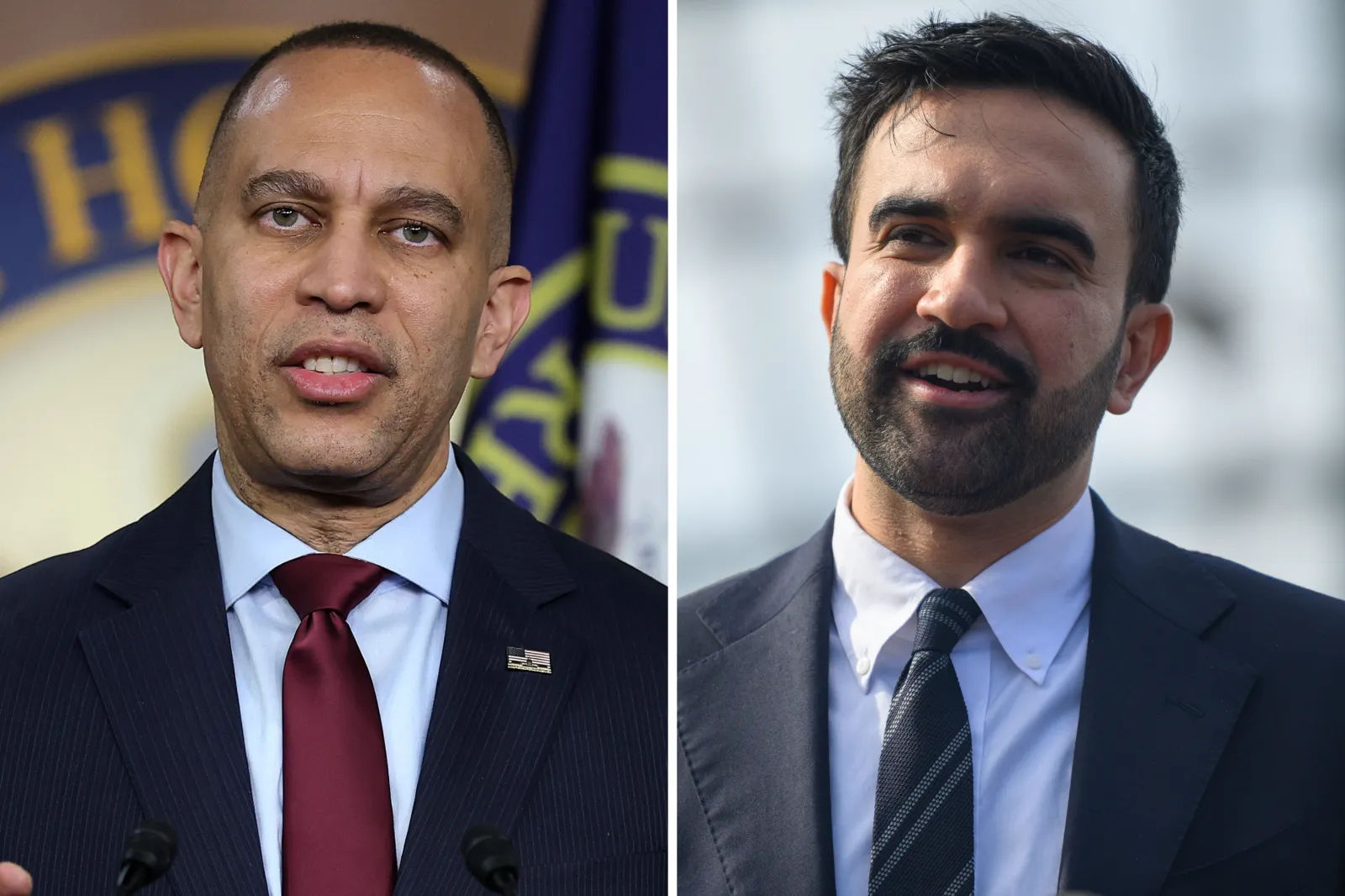
Two congressional primaries in New York City ignite a fierce clash between Mayor Zohran Mamdani and House Minority Leader Hakeem Jeffries, with the stakes set high for the political future of the nation’s largest city.
The Democratic Socialists of America (DSA) have gained significant traction in New York City over the past decade. Mamdani’s recent mayoral victory marked a pivotal moment for the movement, signaling a shift in power dynamics. The rise of DSA and other progressive factions has faced backlash from the entrenched Democratic establishment.
Jeffries, a key player in New York politics, has been criticized by some leftists for his perceived hesitance to support Mamdani during last year’s election. Tensions have escalated as two congressional primaries are viewed as proxy battles between Mamdani’s progressive agenda and Jeffries’ establishment influence. The outcomes of these races could reshape the city’s political landscape.
In New York’s 10th District, former City Comptroller Brad Lander challenges Representative Dan Goldman, who is seen as a moderate Democrat in a district that Mamdani previously won. Meanwhile, in New York’s 13th District, DSA member Darializa Avila Chevalier takes on Representative Adriano Espaillat.
Mamdani has thrown his support behind Avila Chevalier and Lander, while Jeffries stands firmly with both incumbents. This division highlights the contrasting strategies of the two leaders—Mamdani aims to bolster DSA’s influence, while Jeffries focuses on national Democratic objectives, including regaining control of the House of Representatives.
Political analyst Boris Heersink warns that endorsing challengers poses a “bigger political risk” for Mamdani than for Jeffries. Heersink notes that Jeffries and the Democratic caucus typically back incumbents, while Mamdani’s choice to support challengers could expose limitations in his political clout.
Mamdani framed the primary as a call for “more” during a campaign event, emphasizing the need for heightened expectations and delivery from elected officials.
When questioned about their differing endorsements in District 13, Jeffries acknowledged their disagreement, stating that he and Mamdani have “agreed to strongly disagree.”
Mamdani’s relationship with the Democratic establishment has been fraught with tension. Many centrist party members opted to support former Governor Andrew Cuomo’s independent bid over him in 2025.
Criticism has also been directed at Jeffries from progressive Democrats who felt he was slow to endorse Mamdani. Their relationship has never been characterized by strong alliance, yet they have refrained from overtly attacking one another.
The two leaders are not natural allies. Mamdani identifies as a Democratic socialist, while Jeffries has distanced himself from that label and has openly criticized DSA. Their ideological rift has widened as DSA has expanded its presence in Brooklyn, a bastion of progressive politics.
Basil Smikle, a Democratic strategist, attributes much of the friction between DSA and the establishment to “outsider-insider tension.”
Younger voters perceive established politicians like Jeffries as part of a system they distrust, according to Smikle. This generational divide reflects a broader disillusionment with the Democratic Party's branding.
Interestingly, Mamdani refrained from endorsing any challenge against Jeffries himself. Some progressives have called for his ousting due to dissatisfaction with the party's response to President Donald Trump.
City Councilmember Chi Ossé announced a primary challenge against Jeffries but failed to garner support from Mamdani before ending his campaign last month.
Heersink speculates that Mamdani may have doubted Jeffries’ vulnerability, deeming it unwise to expend political capital on such a challenge.
Mamdani can criticize the establishment and support primary challenges against regular members of Congress, but backing a challenge against the party's House leader would be tantamount to declaring war, complicating his ability to achieve goals in Albany.
Progressives in New York City appear to be “treading more carefully” regarding Jeffries, Smikle observes. The potential for Jeffries to become the first African American House Speaker adds weight to this caution.

Mamdani’s mayoral win translated into significant gains for DSA. They have successfully placed members in various offices across New York City and are now contesting congressional races, indicating their readiness to challenge incumbents across the board.
DSA's influence is not confined to New York City; Janeese Lewis George’s victory in Washington, D.C.’s mayoral primary exemplifies their expanding reach. As a Democratic socialist, Lewis George is expected to face minimal opposition in the general election.
DSA also eyes another potential victory in November if Nithya Raman can unseat incumbent Democratic Mayor Karen Bass in Los Angeles.
Incumbents rarely lose renomination, yet some progressives believe New York City presents opportunities for upsets—especially with Mamdani’s backing. Polls indicate Lander holds an advantage over Goldman, who is criticized for not aligning with the district's progressive values.
An Emerson College poll shows Lander leading with 57 percent compared to Goldman’s 23 percent among likely voters surveyed from May 16-17.
A previous Schoen Cooperman Research Poll indicated a tighter race but still favored Lander at 47 percent against Goldman’s 42 percent among likely voters surveyed from May 1-4.
The district encompasses parts of Brooklyn and Manhattan.
Mamdani’s endorsement of Avila Chevalier puts him at odds with national progressives who have backed Espaillat, the incumbent since 2017.
A Data for Progress poll indicated Avila Chevalier leading with 39 percent against Espaillat’s 35 percent among likely primary voters surveyed from June 3-9.
An earlier Upswing Research & Strategy poll showed Espaillat ahead at 42 percent compared to Avila Chevalier’s 28 percent among likely voters surveyed from March 25-30.