

Supreme Court's Shocking Decision to Strip Protections from Haitian and Syrian Immigrants Signals Broader Deportation Wave
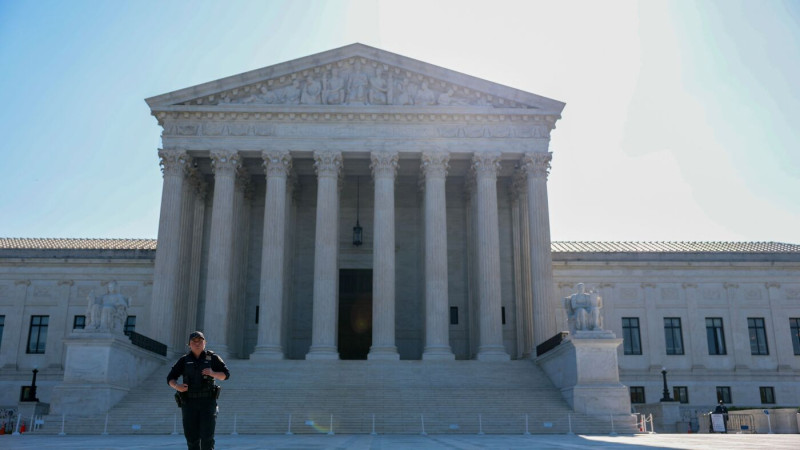
The Supreme Court's ruling allows the Trump administration to terminate temporary legal protections for Haitian and Syrian immigrants, potentially triggering a mass deportation crisis that could ensnare millions.
This decision directly impacts approximately 350,000 Haitians and 6,000 Syrians, but it also threatens nearly 1.3 million individuals from 17 countries currently under Temporary Protected Status (TPS). Many of these individuals have lived in the U.S. for decades and have American children.
The ruling exposes TPS holders from Haiti and Syria to the risk of detention and deportation. It sets a dangerous precedent that could force hundreds of thousands of others with pending asylum claims or immigration relief to leave the country.
Venezuelans represent the largest group benefiting from TPS, followed by Haitians and Salvadorans. TPS was established by Congress in 1990 to prevent deportations to nations suffering from natural disasters or civil unrest.
To qualify for TPS, individuals must have been continuously present in the U.S. since the date of designation. The Department of Homeland Security can extend TPS in increments of up to 18 months.
The Trump administration has claimed that immigrants were inadequately vetted after the Biden administration expanded TPS designations. They argue that conditions in these countries are now safe for return. The Trump administration has ended TPS for about 1 million people from 13 countries, including approximately 650,000 Venezuelans and 50,000 Hondurans. Decisions are pending for around 200,000 Salvadorans and 100,000 Ukrainians whose protections are set to expire soon.
Other nations with smaller TPS populations include Afghanistan, Myanmar, Cameroon, Ethiopia, Lebanon, Nicaragua, Somalia, South Sudan, and Yemen.
The implications of this ruling extend far beyond just Haitians and Syrians. Individuals from various nationalities whose TPS was terminated by the Trump administration have filed numerous lawsuits, many of which remain unresolved. Judges will scrutinize the Supreme Court’s decision closely.
The government contended that only the Department of Homeland Security had the authority to end TPS protections, a claim supported by the court’s conservative majority in a 6-3 decision.
“The decision is definitely bad news,” stated Ahilan Arulanantham, co-director of the Miñana Family Center for Immigration Law and Policy at UCLA and an attorney for Syrian TPS holders. "The implication of this is that at least most of the claims that have been litigated to challenge this administration’s sort of illegal war on TPS are now foreclosed.”
Immigration lawyers argue that both Haiti and Syria are in crisis, making safe returns impossible. They assert that the administration failed to assess conditions in those countries or consult other government agencies as mandated by law.
Typically, Supreme Court decisions take effect 32 days after announcement. Emi MacLean, a senior attorney at the American Civil Liberties Union of Northern California, noted that this ruling will be sent back to lower courts for implementation, likely not before July 27. In the interim, Haitian and Syrian TPS holders may continue working.
“In 32 days, everyone from Haiti and from Syria who held their employment authorization through TPS will most likely lose that authorization," Arulanantham warned.
Lawyers are advising TPS holders to explore alternative options for remaining in the U.S., such as asylum or employment-based visas, although these pathways have become increasingly difficult under current policies.
Many individuals may face a grim choice: voluntarily return to their home countries or endure deportation proceedings. This could lead to job loss and separation from their U.S.-born children.
Each beneficiary will revert to their immigration status prior to receiving TPS unless that status has expired or they have successfully obtained a different status, such as asylum.
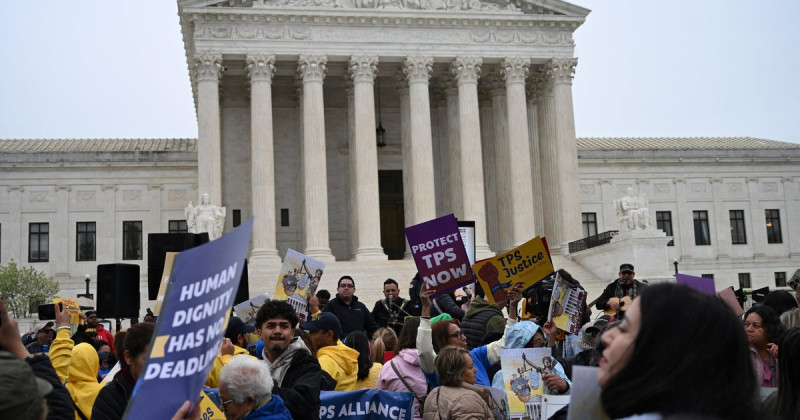
Advocates are calling on Congress to allow TPS holders to remain in the U.S. “We also call on Congress to immediately restore these vital humanitarian protections that the TPS program represents for the sake of our clients and TPS holders, their families, and all of our communities,” said Melissa Keenan, an attorney representing Syrian TPS holders.
Conditions in Haiti and Syria remain dire. Advocates assert that while TPS is intended as a temporary measure, conditions have not improved sufficiently for safe returns.
The law mandates that the DHS secretary consult with other government agencies before designating a country for TPS. Although specific agencies are not named, these consultations could involve the Department of State, National Security Council, and Department of Justice.
TPS beneficiaries from Haiti and Syria contend that other agencies were not consulted and that the decision was made without considering actual conditions in those countries.
Haitians were first granted TPS in 2010 following a catastrophic earthquake, with extensions provided due to ongoing gang violence displacing over a million people. Syrians received TPS in 2012 amid a civil war that persisted until the fall of the national government in late 2024.