

Supreme Court Greenlights Alabama's Racist Congressional Map, Ignoring Discrimination
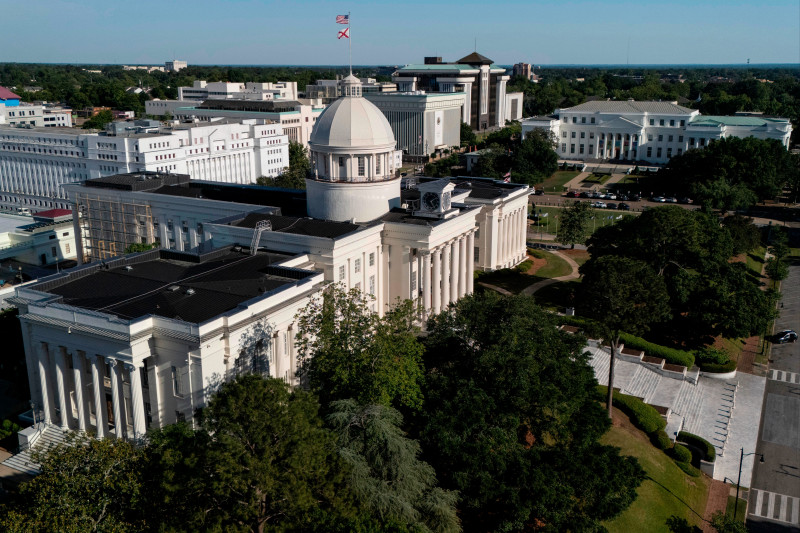
The U.S. Supreme Court just handed Alabama a victory, allowing a congressional district map that blatantly favors Republicans to stand.
This decision overturned a three-judge district court panel that labeled the map as "tainted by intentional race-based discrimination." The dissent from the court's three liberal justices was clear and public.
As a result, Alabama's 2026 midterm elections will showcase six Republican-leaning districts and only one Democratic-leaning district. Democrat Shomari Figures, representing Alabama's 2nd Congressional District, is likely to lose his seat due to this ruling.
The saga of Alabama's congressional map stretches back to 2021 when the state rolled out a new map reflecting population changes from the census. This map included just one majority-Black district out of seven, despite the fact that over one-quarter of Alabama's population is Black.
Voters quickly filed lawsuits, asserting that the map diluted minority votes, violating both the Voting Rights Act and the Constitution. Lower courts sided with the voters, mandating that Alabama create a map with two districts where Black voters could realistically elect their preferred candidates. The Supreme Court has repeatedly instructed Alabama to produce a compliant map.
Yet, Alabama has resisted and continued to fight in court. On Tuesday, that strategy bore fruit.
What shifted? In April, the Supreme Court's conservative supermajority effectively dismantled key elements of the Voting Rights Act, ruling that states cannot intentionally create majority-minority districts.
Following this ruling, Alabama sought to reinstate its previous map, arguing that the new decision allowed for a configuration with only one majority-Black district. In an unsigned order in May, the Supreme Court reversed its earlier stance and permitted Alabama to use the old map for the upcoming midterms.
This triggered a rush of activity in Alabama. By the time the Supreme Court issued its May order, absentee voting had already commenced using the court-drawn map. Consequently, Republican Governor Kay Ivey canceled elections and arranged a special primary for August concerning the affected congressional races.
However, the case was far from resolved.
The Supreme Court had instructed a lower court panel to reassess Alabama's map in light of its recent Voting Rights Act ruling. Just 15 days later, this panel—comprised of three Republican judges, including two Trump appointees—unanimously determined that even under the Supreme Court's new standards, the single Black district plan was "intentionally discriminatory."
Alabama returned to the Supreme Court, contending that the map was partisan rather than racially discriminatory—essentially claiming that the Republican legislature simply aimed to elect more Republicans. They argued that under the Supreme Court's revised interpretation of the Voting Rights Act, their GOP map should be upheld.
The conservative justices agreed, stating that the lower court "did not heed the presumption of legislative good faith."
The dissenting trio criticized the conservative majority for ignoring its own 2006 ruling in Purcell v. Gonzalez, which asserted that courts should avoid altering election rules too close to an election.
Justice Sonia Sotomayor condemned the ruling, claiming it "debases the democratic process" and "corrodes the rule of law by rewarding Alabama's gamesmanship and outright defiance of court orders."
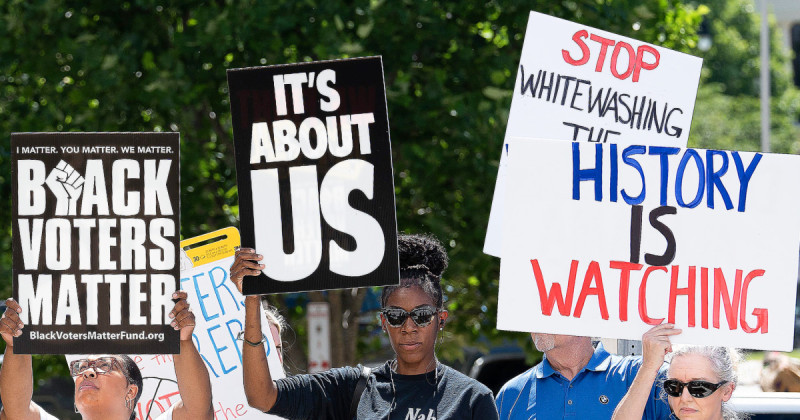
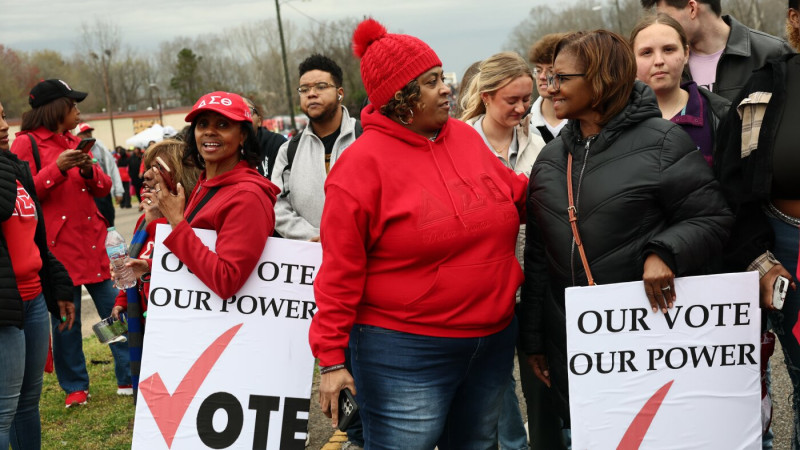
Voting rights advocates echoed her sentiments, with Deuel Ross from the Legal Defense Fund stating that this decision emboldens Alabama and similar states to discriminate against Black voters without repercussions. He described the reinstatement of a racially discriminatory map as a blatant disregard for consistent legal application.
In stark contrast, Alabama officials celebrated this ruling as a triumph.
Attorney General Steve Marshall declared that Alabama has been unjustly treated by judges who act as if the state hasn't progressed since the 1960s. He asserted that Alabama has every right to draw its congressional maps according to its legitimate objectives without facing undue scrutiny from federal courts.
This ruling marks yet another significant Supreme Court decision poised to reshape the landscape of the 2026 midterm elections, complicating prospects for Democrats.