

Trump's Primetime Rant: No Evidence, Just Wild Claims and Conspiracy Theories
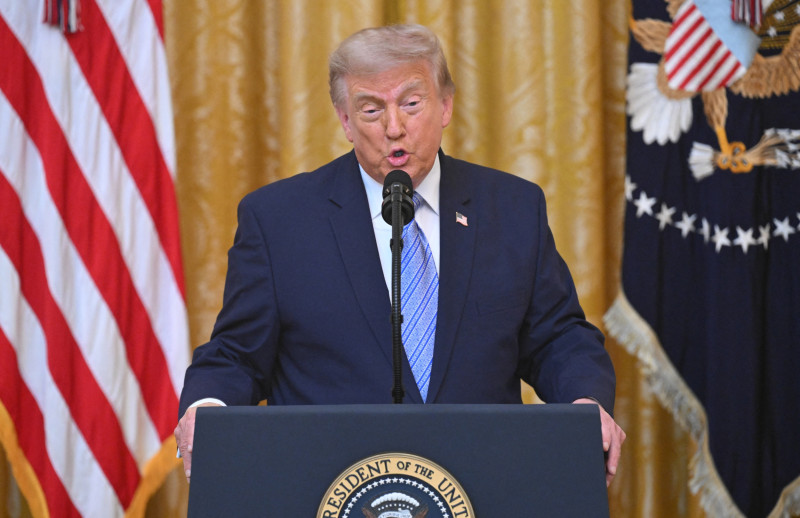
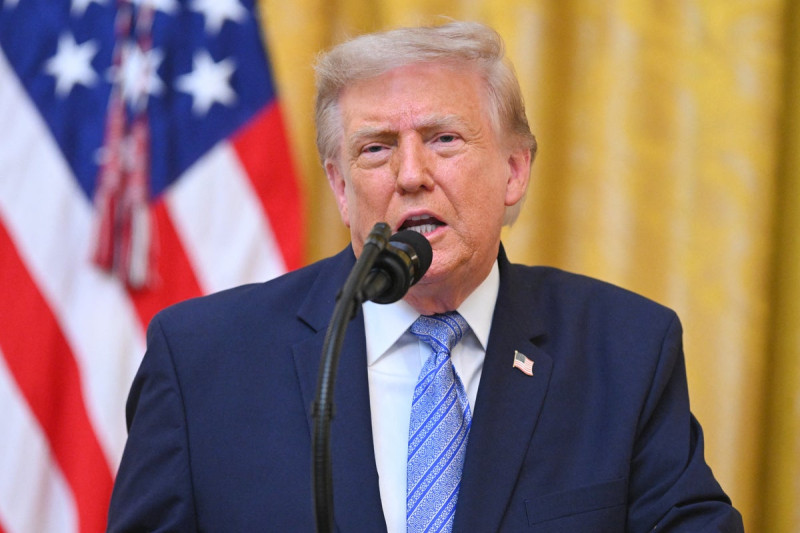
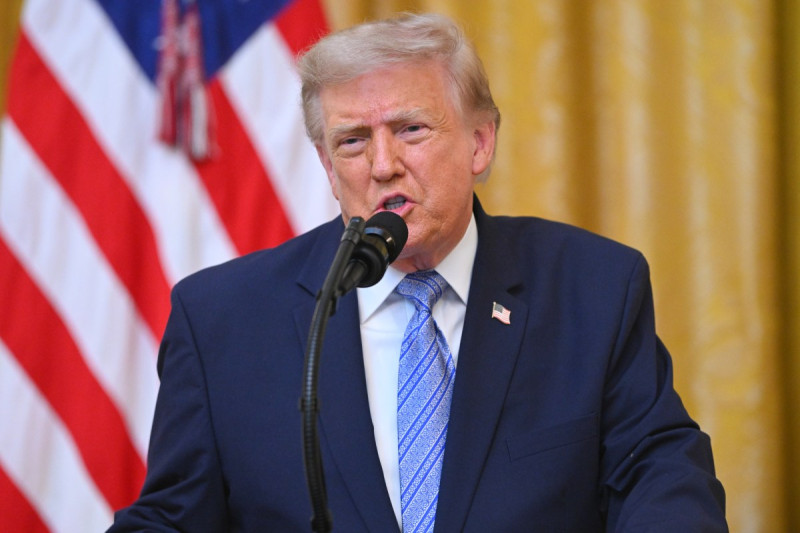
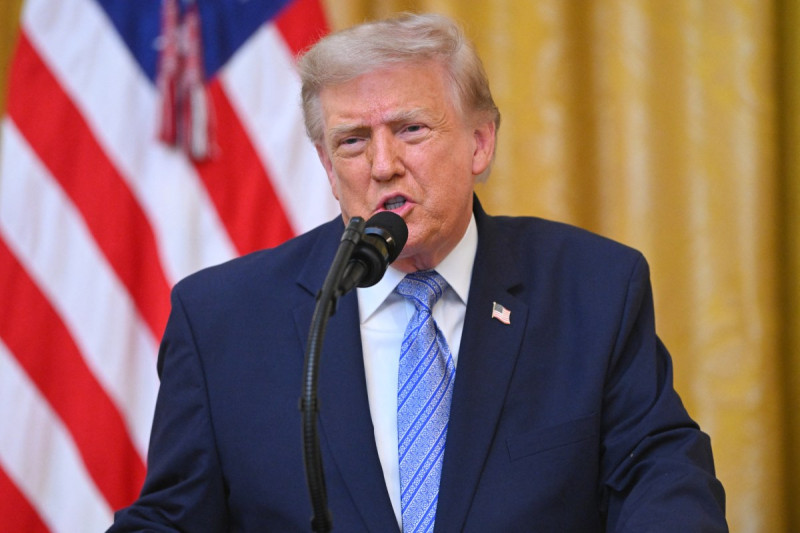
President Trump unleashed a barrage of unfounded claims during a primetime address, declaring the U.S. election system falls "catastrophically short," a familiar refrain that has been met with fierce rebuttals from election experts.
In tandem with the speech, the White House unveiled a cache of newly declassified documents regarding election security. A White House official admitted prior to the address that none of the released information would support claims of vote-switching or hacked voting machines. Despite this, Trump and his supporters have perpetuated the false narrative that the 2020 election was stolen through widespread fraud.
Trump urged lawmakers to pass the SAVE America Act, which includes contentious proposals like requiring proof of citizenship for voter registration. This legislation remains stalled, facing skepticism from some Senate Republicans. While Trump's allies in the GOP praised his speech and echoed calls for the Act, Democrats condemned it, accusing him of attempting to undermine electoral integrity.
David Becker, executive director of the Center for Election Innovation and Research, criticized the speech for lacking any groundbreaking revelations.
"This administration has been in total control of the federal government for 18 months. They've redirected untold taxpayer resources to try to uncover evidence of massive voter fraud," Becker stated. "And at the end of that 18 months, all we got is more rehashed, debunked conspiracy theories, many of which we've known about before and already knew didn't affect our elections."
Among Trump's more outrageous claims was that the Chinese government acquired 220 million U.S. voter registration files from 2020 to 2023, which he labeled "the largest compromise of election data in history." He asserted this data included voters' names, addresses, phone numbers, and party affiliations.
Trump alleged that intelligence agencies concealed this information from him and Congress, claiming they kept it "secret and hidden." However, voter registration data is publicly accessible; many states post it online or allow requests for it, although some personal details are kept confidential. The implications of having access to voter rolls do not equate to the ability to commit fraud.
"It sounds bad when you hear about it," Becker remarked. "The reality is: voter files in the United States are public."
A declassified intelligence report from 2020 revealed that China obtained voter data from multiple states for public opinion analysis regarding the 2020 election.
No evidence exists that China or any other foreign entity attempted to manipulate the results of the 2020 election by interfering with voting processes. The U.S. intelligence community concluded in March 2021 that no foreign actor "attempted to alter any technical aspect of the voting process," including ballot casting or counting.
Trump also claimed that China "fought like hell" to prevent his victory in 2020, asserting that they wanted him to lose because he was "wise to them."
The National Intelligence Council assessed shortly after the election that China opted not to interfere, believing neither a Trump nor Biden presidency would be beneficial enough to risk exposure. However, one intelligence official held a minority view suggesting China attempted to undermine Trump through social media and official statements.
While Russia sought to influence the election by promoting Trump, Iran aimed to diminish his campaign. Neither country interfered with voting systems.
China has categorically denied any intention to meddle in U.S. elections, with its embassy in Washington asserting adherence to non-interference principles.
Trump pointed to federal findings indicating "hundreds of thousands of noncitizens and dead people are listed and active on the voter rolls." He referenced a Department of Homeland Security review revealing over 250,000 noncitizens registered to vote across four states: California, Pennsylvania, New Jersey, and Nevada.
Becker challenged these findings, suggesting they should be taken "with a great big grain of salt."
"That's based on using commercial data that cannot be used," Becker explained during a CBS News special report. "It's going to create a ton of false positives. I guarantee you, that data includes a ton of people, maybe even a majority of people, who are absolutely eligible voters, and states would probably be breaking the law if they remove those voters from the rolls."
Voting by noncitizens in federal elections is illegal and documented cases are exceedingly rare. The Brennan Center for Justice examined 42 jurisdictions where 23.5 million people voted in 2016 and found only 30 instances of suspected noncitizen voting.
State-level audits reflect similar findings. A 2024 audit in Georgia identified 20 noncitizen registered voters among its 8.2 million voters. Ohio found 597 noncitizen registered voters out of over 8 million in 2024, including 138 who cast ballots. Texas reported 2,724 "potential non-citizens" among its over 18 million voters, while Louisiana identified 390 noncitizens out of just under 3 million voters, with 79 having voted in at least one election.
Cases of voting by deceased individuals are also rare. Georgia officials discovered just four instances of votes cast in deceased individuals' names during the 2020 election; Arizona found one such case. Michigan lawmakers identified two cases in Detroit's county—one was a clerical error and the other involved a person who died after mailing in her ballot.
The Justice Department has pursued access to voting records across numerous states to ensure compliance with federal laws mandating clean voter rolls and checks for noncitizen voters. So far, the federal government has lost in district courts 11 times without securing any legal victories regarding voter rolls.
The White House also declassified files related to an FBI investigation into a Michigan voter registration drive believed to involve fraudulent registrations. The investigation was closed despite pushback from investigators.
Trump labeled the target of this probe a "Democrat get-out-the-vote organization," claiming the "Biden Department of Justice slow-walked the investigation and killed it."
Allegations surrounding suspicious voter registrations in Muskegon County have been public knowledge for years. State officials confirmed that questionable registrations were identified before any fraudulent votes could be cast.
Trump asserted that voting machines and ballot-counting systems are "extremely exposed to attack," branding them "vulnerable" and "easily compromised." He referenced CIA intelligence regarding plots involving voting machines in Venezuela.
However, the Venezuela-related intelligence released by the White House pertains specifically to systems made by Smartmatic—a company whose technology is not utilized in the United States except in Los Angeles County.
Experts maintain that voting machines are challenging to compromise due to stringent monitoring protocols; they are not internet-connected and are typically backed by paper ballots or receipts for auditing purposes.
"They're under lock and key until they are publicly tested to make sure they haven't been tampered with," Becker stated. "And then they are used and we still don't trust them. We have those paper ballots."
In Georgia's 2020 general election, every ballot was counted three times: once by machines during initial counting, once during an audit involving hand recounts statewide, and once during a machine recount requested by Trump's campaign. All three counts confirmed Biden's victory over Trump.
In his speech, Trump referenced newly declassified intelligence indicating that adversaries like Russia, China, Iran, and North Korea possess capabilities to compromise U.S. election infrastructure.
The document Trump cited—a National Intelligence Council memo from January 2020—acknowledged adversaries' capabilities but clarified that manipulating vote tabulation systems would be "difficult on a wide enough scale to compromise election results." It noted that exploiting these systems often requires "physical proximity" and would likely be detected through audits.
The memo also cautioned that foreign adversaries might fabricate or exaggerate claims about their ability to manipulate voting systems as a means to "undermine public confidence."