

U.S. Supreme Court Deals a Major Setback to Voting Rights Act
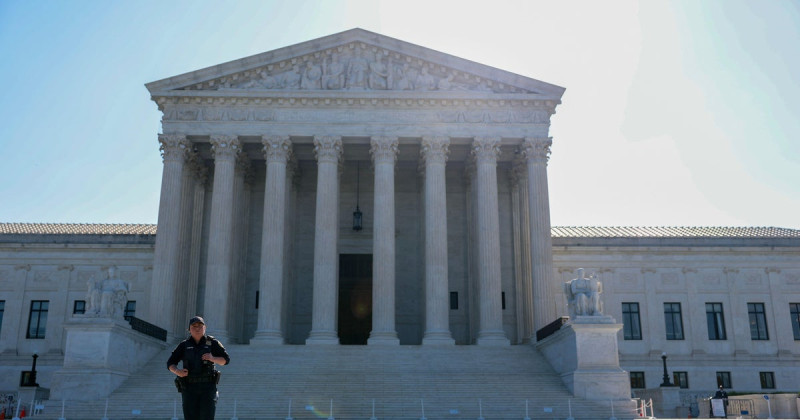
The U.S. Supreme Court delivered a contentious ruling on Wednesday, declaring Louisiana's 2024 election map, which aimed to establish a second majority-Black congressional district, as "an unconstitutional racial gerrymander." This decision, reached with a 6-3 vote along partisan lines, has significant implications for minority representation in the state and beyond.
While Section 2 of the Voting Rights Act remains technically intact, this ruling is part of a broader trend that has effectively weakened the landmark legislation established in 1965 during the Civil Rights Movement. Experts predict that this latest decision will further erode minority representation across various levels of government.
"This is one of the most important and most pernicious decisions of the Supreme Court in the last century," remarked Rick Hasen, an election law expert and head of the Safeguarding Democracy Project at UCLA. He emphasized that what remains of the Voting Rights Act is now merely a "hollow shell" of its former self.
The immediate effects of this ruling on the upcoming midterm elections remain uncertain. Many states have already passed candidate filing deadlines and primaries, making it seemingly too late to redraw electoral maps in response to the court's decision. However, lawmakers and candidates in states like Tennessee and Georgia swiftly called for new district configurations following the ruling.
Louisiana stands to be most directly impacted, as it must now revise its congressional map, likely resulting in one less Democratic-leaning district. The Supreme Court's ruling alters the interpretation of protections under Section 2 of the Voting Rights Act, particularly in areas with racially polarized voting. Plaintiffs challenging political boundaries that dilute minority voting power must now demonstrate discriminatory intent rather than merely showing discriminatory effects.
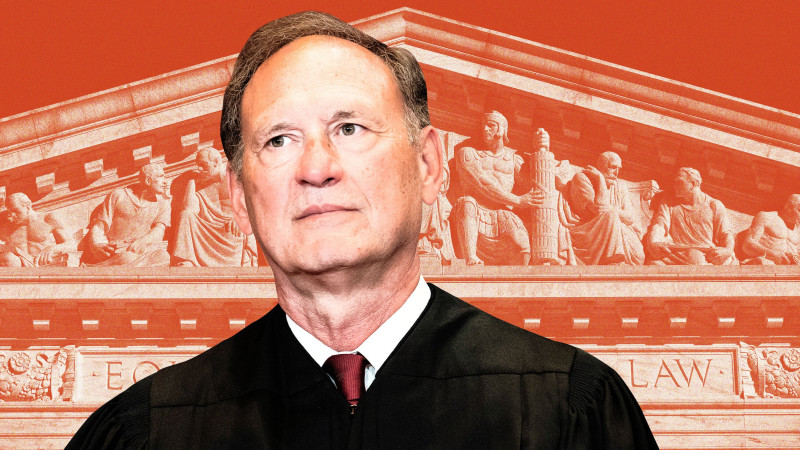
Justice Samuel Alito, who authored the majority opinion, stated that Section 2's focus must shift to prohibiting "intentional racial discrimination." This shift raises concerns among legal experts about the difficulty of proving such intent. Atiba Ellis, a law professor at Case Western Reserve University, noted that requiring plaintiffs to find explicit evidence of racist intent complicates their cases significantly.
"We are essentially asking plaintiffs to find a smoking gun—proof of racist intent that is clearly articulated," Ellis explained. "Most legislators are savvy enough not to openly express such views." This change could embolden Republican-controlled state legislatures in the South to eliminate Democratic-represented House districts previously safeguarded by the Voting Rights Act.
In Florida, lawmakers acted quickly after the ruling, approving a new congressional map designed to create four additional GOP-leaning districts. The office of Governor Ron DeSantis cited the Louisiana case in advocating for this new map, although it does not specifically target districts likely protected under Section 2.
Edward Greim, who represented the plaintiffs in the Louisiana case, praised the ruling, claiming it moves the nation closer to a "colorblind society." He suggested that some districts created under the Voting Rights Act may be challenged as illegitimate.

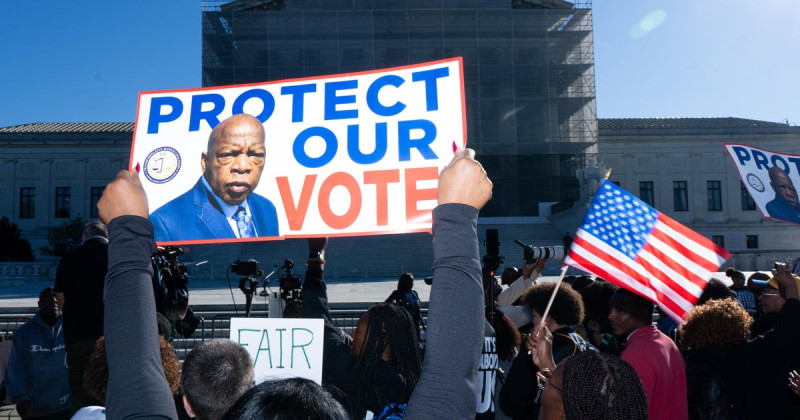
The Voting Rights Act has long been regarded as a cornerstone achievement of the Civil Rights Movement. However, since 2013, it has faced significant challenges from an increasingly conservative Supreme Court led by Chief Justice John Roberts. A notable exception occurred two years ago when the court upheld previous rulings on Section 2 in a redistricting case from Alabama.
The Louisiana case revolved around a map drawn by a Republican-led legislature following the decennial census. After extensive litigation, Louisiana initially agreed to create a second majority-Black district in a state where Black residents comprise approximately 30% of the population. Currently, two out of six House members from Louisiana are African American.
However, after these new maps were established, a group identifying as "non-African-American voters" intervened to contest the legislature's redistricting efforts. The Trump administration supported this intervention, arguing against the necessity of a second majority-minority district for Black voters.
On Wednesday, the Supreme Court sided with this perspective. Alito wrote in his majority opinion that Section 2 does not impose constitutional liabilities on states like Louisiana for their redistricting efforts. "Compliance with Section 2 thus could not justify the State's use of race-based redistricting here," he stated.
In her dissent, Justice Elena Kagan expressed her disagreement with the majority opinion, asserting that it undermines Congress's intent to ensure racial equality in electoral opportunities. She emphasized that the court's decision would set back foundational rights granted by Congress.
Prior to this ruling, an analysis indicated that changes affecting Section 2 could jeopardize at least 15 House districts currently represented by Black members of Congress. Damon Hewitt, president of the Lawyers' Committee for Civil Rights Under Law, lamented that "Black Americans have never been fully represented in the electoral process," adding that this ruling diminishes the likelihood of achieving equitable representation.
As discussions continue regarding the implications of this ruling, it remains clear that the landscape of voting rights and representation is shifting dramatically across the United States.